It is with profound sadness and a great sense of loss that we share the news of the passing of Rosalie Segal (LL.D.), a dedicated community leader and dear friend of Simon Fraser University. Rosalie passed away peacefully in November. She will be deeply missed. A cherished philanthropist, patron of the arts and higher education, and advocate for SFU’s students with special needs, Rosalie will be long remembered for her spirit of kindness and generosity. […]
Read More...
Beedie School of Business News
SFU mourns the loss of dear friend and dedicated community leader Rosalie Segal (1931-2023)
Nov 15, 2023Recent News
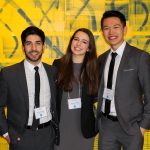 | Beedie School of Business NewsAn interdisciplinary team of SFU undergraduates has qualified as one of two teams that will represent Canada at The Global Challenge, taking place at the University of Oxford, UK, on April 30 and May 1. The Global Challenge is an international competition for students to explore and present ideas around social and environmental change. Read More... |
 | Beedie School of Business NewsA team of Full-Time MBA students recorded a memorable win for the Beedie School of Business at the fourth annual SFU Net Impact Sustainability Challenge, overcoming strong competition in the final round from American University’s Kogod School of Business (finishing second), Oregon’s Lundquist School of Business (third) and Western’s Ivey (fourth). Read More... |
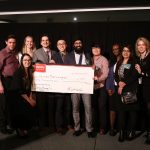 | Beedie School of Business NewsSleep apnea treatment device takes judges’ breath away at OppFest innovation competitionMar 31, 2017SFU’s brightest young entrepreneurs gathered at the university’s Surrey campus on Thursday, March 23, 2017, for the seventh annual Opportunity Fest event, showcasing their innovative ventures and competing for prizes in a number of categories. The overall grand prize winner for the venture that best exemplifies commitment to a Triple Bottom Line – taking into consideration People, Planet and Profit – was won by Zennea Technologies, which is creating a portable device to treat sleep […] Read More... |
 | Beedie School of Business NewsBurnaby North-Seymour MP and Beedie School of Business alumnus Terry Beech has been named as one of the World Economic Forum’s Young Global Leaders. The program recognizes young leaders from across 40 different countries for making positive change in their communities. “It’s a privilege and a pleasure to be inducted into the Young Global Leaders program and to stand with so many amazing recipients, past and present,” says Beech. “I’m proud to represent Burnaby and […] Read More... |
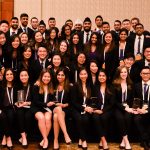 | Beedie School of Business NewsSFU became the first school to win all four categories at the Enactus Regional Exposition for Western Canada, a competition where teams of students present community outreach projects and business ventures to a judging panel of business leaders. This year’s Regional Exposition for Western Canada was held in Calgary from March 2-3, with 19 universities competing for the regional champion titles. Enactus is a community of student, academic and business leaders who are using entrepreneurial […] Read More... |
 | Beedie School of Business NewsSandra Horvath appointed as Chair of Beedie’s Business Technology Management Advisory BoardMar 09, 2017The Beedie School of Business at Simon Fraser University announces the appointment of Sandra Horvath as Chair of the Business Technology Management (BTM) Advisory Board. Read More... |
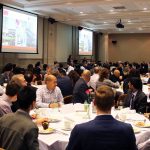 | Beedie School of Business NewsThe Spring 2017 cohort of the Beedie School of Business’s Mentors in Business (MIB) program, which pairs Beedie’s undergraduate and graduate students with industry professionals, is the largest group to date, bringing together 184 pairings. The program connects students beginning their career search with mentors, including CEOs, VPs, and Senior Directors from the business community, who want to inspire, motivate and share their knowledge. Read More... |
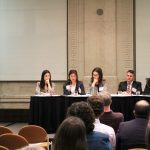 | Beedie School of Business NewsThe widening gap between rich and poor is a global phenomenon affecting both developed and developing economies, and has been identified by the World Economic Forum as the single most important risk facing the world over the next decade in its annual Global Risks Report. But how can we reverse this trend, and to what extent can – or should – investors be responsible for instigating that change? This question was at the heart of […] Read More... |
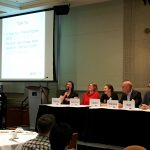 | Beedie School of Business NewsThe Beedie School of Business partnered with the Canadian College of Health Leaders to bring together leading experts for a panel discussion on the opioid overdose crisis on February 22, 2017. Moderated by Beedie Adjunct Professor Kate Dilworth, the event – entitled Leadership in the Context of an Adaptive Challenge: The Opioid Overdose Crisis in BC – welcomed leaders with diverse, personal and professional experiences of the challenges faced in tackling the current health crisis. Read More... |
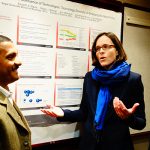 | Beedie School of Business NewsRecent research published by Beedie’s Elicia Maine and Jon Thomas has been featured in the Globe and Mail. The research examined the role of strategic timing in the success of science-based startup businesses, focusing on the nanobiotechnology industry. Read the full article on the Globe and Mail’s website here. Read More... |
 | Beedie School of Business NewsHelping people in Vancouver’s Downtown Eastside learn job skills and find employment has earned Simon Fraser University Master of Business Administration graduate Anna Migicovsky a British Columbia Social Innovation Youth Award for her work. The BC Social Innovation Youth Awards program is a joint partnership between the British Columbia Ministry of Social Development and Social Innovation and RADIUS SFU. The program launched this year and celebrates the exemplary leadership and ingenuity of B.C.’s youth and […] Read More... |
 | Beedie School of Business NewsThe Society for Consumer Psychology has selected Brent McFerran, W.J. VanDusen Associate Professor of Marketing at the Beedie School of Business, as a co-winner of its Early Career Award. The award recognizes McFerran’s scientific contributions to consumer psychology. Cassie Mogilner Holmes, Associate Professor of Marketing at UCLA Anderson School of Management, was also named as a co-winner of the award. Read More... |
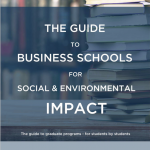 | Beedie School of Business NewsBeedie School of Business has secured a place in the Top 50 Environmental Sustainability Programs ranking in the 2016 Guide to Business Schools for Social & Environmental Impact report, published by Net Impact, a non-profit empowering transformational change in the workplace. Beedie is the only Canadian school named in the list, which features leading business schools from around the world. Read More... |
 | Beedie School of Business NewsA Simon Fraser University venture that is poised to disrupt the global hearing aid market has taken the best overall $30,000 prize at the University’s annual Coast Capital Savings Venture Prize competition. Read More... |
 | Beedie School of Business NewsBeedie School of Business BBA alumnus and founder of Traction on Demand, Greg Malpass was one of three winners of Impact Awards at the 16th annual BASS Banquet. Read More... |
 | Beedie School of Business NewsTiming is essential when it comes to achieving commercial success for science-based companies according to a new research paper by faculty at SFU’s Beedie School of Business. The study, published in leading journal Nature Nanotechnology is part of a broader multi-year project on the global nanobiotechnology industry led by Professor Elicia Maine and Dr. Jon Thomas. Read More... |
 | Beedie School of Business NewsStatement from the Dean on U.S. Travel BanFeb 01, 2017The Beedie School of Business at Simon Fraser University in Vancouver, Canada, like other faculties and universities around the world, is deeply concerned by the travel restrictions currently in effect in the United States. We express our solidarity with those individuals, particularly students and faculty members, affected by the executive order. Like fellow institutions of higher education in the United States and elsewhere, we condemn the denial of freedoms by these arbitrary measures, which risk breaking […] Read More... |
 | Beedie School of Business NewsThis morning, Sarah Lubik, Director of Entrepreneurship for SFU and a lecturer in innovation and entrepreneurship at the Beedie School of Business, took part in an interview on the Business in Vancouver show on Roundhouse Radio. In the interview, Lubik discusses the importance of innovation and entrepreneurship, and her role as one of Canada’s ten Innovation Leaders who are helping the federal government develop Canada’s Innovation Agenda. To hear the interview in full, listen to the show on the […] Read More... |
 | Beedie School of Business NewsEarlier this month, leading sustainability professionals from across North America met in Vancouver to share their successes, challenges and insights at the Embedding Project’s North American Peer-to-Peer Network event. Over the two-day session, members engaged in facilitated peer-coaching sessions, reflected on their past year as Change Agents and piloted new research and new resources. Highlights included research insights on workplace sustainability-oriented initiatives by Beedie PhD student, Simon Pek, and new research coming out of the […] Read More... |
 | Beedie School of Business NewsBeedie Strikes Gold at JDC WestJan 27, 2017A team of undergraduates at the Beedie School of Business produced a series of outstanding performances at this year’s JDC West case competition, winning three gold medals and securing podium finishes in three further categories. The team won first place in the Human Resources, Not-for-Profit, and Skit categories; second place in Taxation; and third place in both the Entrepreneurship and Intro Video competitions. Read More... |
 | Beedie School of Business NewsA group of Beedie students raised $25,800 for the Canadian Cancer Society last semester, in an initiative run as part of a project management class at the school. Read More... |
 | Beedie School of Business NewsAgainst a global backdrop of reduced economic growth, multinational companies are increasingly seeking profits in “low-income, high-risk countries”, according to an article co-authored by Beedie professor Eric Werker. Published in the Harvard Business Review, Mapping Frontier Economies identifies 19 “frontier countries”, characterized by political and legal uncertainty, and low per capita income – but potential for high growth. Read More... |
 | Beedie School of Business NewsGeorgia Straight: SFU instructors show some entrepreneurial zeal as they reinvent business education in CanadaJan 04, 2017The following article was published by the Georgia Straight on November 9, 2016. By Charlie Smith. Shawn Smith didn’t follow a conventional path to becoming a business-education innovator. Growing up in White Rock, he took the B.C. secondary-school curriculum by correspondence while working full-time, starting at the age of 15. “The original intention was to sort of Doogie Howser it and finish it all very early,” Smith told the Georgia Straight by phone. “I made […] Read More... |
 | Beedie School of Business NewsCanada has earned a reputation as offering a great environment for entrepreneurs taking their first steps into the world of enterprise. But how do you take a successful start-up business to the next level and grow it into a major, multi-million dollar company? That was the question behind Scaling Up: Growing Multi-Million Dollar Companies in Vancouver, an event presented by Discovery Foundation’s Mentoring and Catalyst Program, and hosted by Venture Connection in partnership with SFU’s […] Read More... |
 | Beedie School of Business NewsThe following article was published by the Globe and Mail on December 16, 2016. By Andrey Pavlov. The B.C. government announced Thursday their new program designed to help address the housing affordability crisis that has spread across many parts of our province. Read More... |
 | Beedie School of Business NewsBeedie hosts event on 3D printingDec 16, 20163D printing arrived in the public consciousness in a blaze of media attention around 2012, with stories focusing on sensational aspects, such as the perceived danger of 3D printed guns or the opportunity to print your own Stradivarius violin. A Financial Times article from the time claimed it would be “bigger than the internet”, and President Obama even referred to 3D printing in his 2013 State of the Union Address, saying it had “the potential […] Read More... |
 | Beedie School of Business NewsBeedie students reach entrepreneurship award finalsDec 12, 2016Two Beedie School of Business students reached the final three in the Entrepreneur’s Organization (EO) Global Student Entrepreneur Awards (GSEA) Regional Competition in Vancouver. Read More... |
 | Beedie School of Business NewsBeedie School of Business PhD student Simon Pek has recently returned from the Council of Europe’s World Forum for Democracy, where work done by Democracy in Practice, the non-profit organization he co-founded, earned them a place as one of three finalists in the Democracy Innovation Award. Read More... |
 | Beedie School of Business NewsThe centuries-old practice of mindfulness offers significant benefits to individuals and businesses involved in customer service, according to a new article co-authored by professors at Simon Fraser University’s Beedie School of Business. Read More... |
 | Beedie School of Business NewsBy Ian Bryce A $500,000 gift from Simon Fraser University alumnus Ryan Beedie will support 25 new undergraduate awards for students in SFU’s Beedie School of Business. The generous gift marks five years since he and his family bestowed $22 million—the largest gift in SFU’s history—to establish the Beedie School of Business. “This wonderful gift will strengthen SFU’s commitment to engage the world,” says SFU President Andrew Petter. “These awards benefit the innovators and entrepreneurs of tomorrow and […] Read More... |
 | Beedie School of Business NewsBeedie School of Business alumnus, Parry Malm received Tech Entrepreneur of the Year and Best New Business at the inaugural UK Business awards on November 11 in London, UK. Malm is co-founder and CEO of artificial intelligence marketing technology company, Phrasee. Launched in 2015, Phrasee uses artificial intelligence to write marketing language by combining natural language generation and machine learning. In July 2016, Phrasee closed a £1m seed funding round, led by Next 15 PLC. It was the […] Read More... |
| Beedie School of Business NewsBritish Columbia’s newest independent senator is Yuen Pau Woo, a senior resident fellow at the Jack Austin Centre for Asia Pacific Business Studies at SFU. Prime Minister Justin Trudeau announced the appointment this fall. Woo has more than 25 years of experience in strategy and policy for business, government and not-for-profit organizations. He is widely recognized as a leading thinker on Asian economic issues and Canada-Asia relations, and is a recipient of the Queen’s Diamond […] Read More... |
 | Beedie School of Business NewsA team of Beedie School of Business undergraduate students took home the silver at the 14th annual Eller Collegiate Ethics Case Competition, held at the University of Arizona from October 20-22. Read More... |
 | Beedie School of Business NewsThe design of a website could be just as influential as the message it conveys, according to new research from Simon Fraser University’s Beedie School of Business. Read More... |
| Beedie School of Business NewsTravel businesses locating – and growing – here offer a state-of-the-art blend of options. Read More... |
 | Beedie School of Business NewsThe Beedie School of Business has been ranked as one of the top 25 graduate business schools in the world for its dedication to integrating sustainability into the education of future business leaders. Read More... |
 | Beedie School of Business NewsJing Li, Associate Professor of International Business and Canada Research Chair in Global Investment Strategy at the Beedie School of Business, has been named to the 2016 cohort of the Royal Society of Canada College of New Scholars, Artists and Scientists. Read More... |
 | Beedie School of Business NewsA portable DUI-testing headset, a revolutionary clean tech membrane, and a home diagnostic for chemotherapy patients were just some of the pioneering ventures pitched to a panel of guest judges at SFU’s Invention to Innovation Venture Pitch competition. Read More... |
 | Beedie School of Business NewsThe first students to complete the new Graduate Certificate in Science and Technology Commercialization program at SFU’s Beedie School of Business are preparing to transform their game-changing technology inventions into viable, commercialized innovations. Read More... |
 | Beedie School of Business NewsTaylor Ward’s student experience has been tailor-made for success. Read More... |
 | Beedie School of Business NewsThe Economist: Tests of characterOct 05, 2016How personality testing could help financial inclusion. Read More... |
 | Beedie School of Business NewsIn the second part of a two-part interview, SFU Director of Entrepreneurship Sarah Lubik talks about the path her new role has led her on, why entrepreneurship skills are so important today, and why SFU’s approach to teaching entrepreneurship is both empowering and unique. Read More... |
 | Beedie School of Business NewsA trio of Beedie School of Business alumni have been named on Business in Vancouver’s (BIV) prestigious 2016 Top 40 Under 40 list. Read More... |
 | Beedie School of Business NewsThe following is an extract from an article published by The Province on September 30. By Randy Shore. Read More... |
 | Beedie School of Business NewsSimon Fraser University has opened the Charles Chang Innovation Centre, a new graduate student residence and innovation facility in downtown Vancouver. Read More... |
 | Beedie School of Business NewsBeedie School of Business professor Gervase Bushe has been named to a prestigious list of the 30 Most Influential Thinkers in the field of Human Resources. Read More... |
 | Beedie School of Business NewsAs a two-time winner of the Beedie School of Business’ highest teaching honour, the TD Canada Trust Distinguished Teaching Award, professor Avi Bick is clearly not content to rest on his laurels. Read More... |
| Beedie School of Business NewsSarah Lubik is in the business of creating entrepreneurs. Read More... |
 | Beedie School of Business NewsMOT MBA alumnus awarded Fulbright ScholarshipAug 29, 2016Beedie School of Business Management of Technology (MOT) MBA alumnus Rick Colbourne has been awarded a Fulbright Visiting Research Chair in Indigenous Entrepreneurship at the University of Arizona. Read More... |
 | Beedie School of Business NewsBBA alumnus Elio Luongo elected CEO of KPMG CanadaAug 26, 2016Beedie School of Business alumnus and Dean’s External Advisory Board member Elio Luongo has been appointed Chief Executive Officer of KPMG Canada. Read More... |